
The Great Migration: Why We Are Leaving Social News Behind
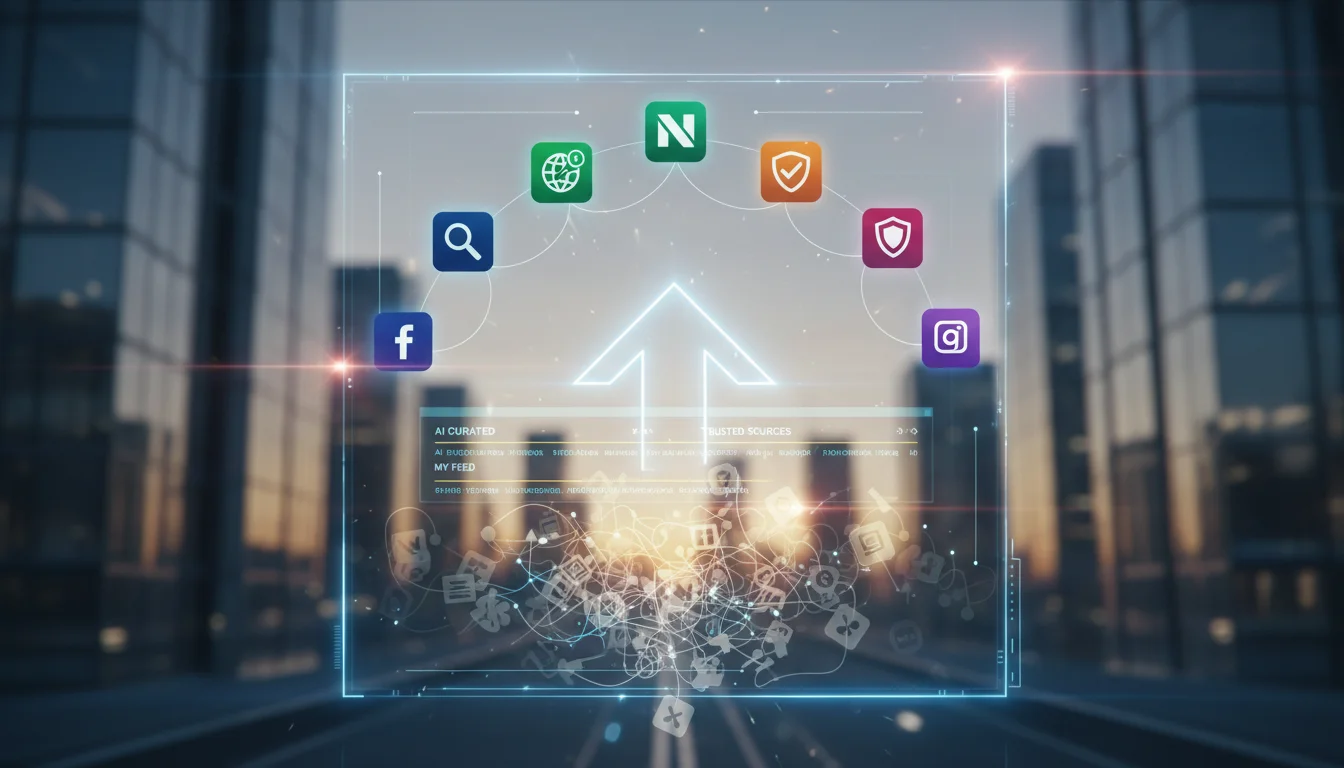
For over a decade, social media timelines were the default newsstand for the digital age. But in 2026, the tide has turned. The endless scroll, once a source of connection, has mutated into a landscape of algorithmic rage-bait, fragmented updates, and cognitive overload. Users are no longer asking "What’s happening?" but rather "How can I filter this noise?"
The trend is clear: we are moving from algorithmic imposition to intentional curation. We want control back. We want news feeds that inform us, not just inflame us. This shift has given rise to a new generation of news applications designed to respect your attention span and broaden your perspective.
Whether you are a power user who wants to hand-pick every source or a casual reader seeking an AI-driven summary of the day’s events, there is a tool built for you. Here are the best news apps for personalized feeds in 2026.
The Control Freak’s Choice: Best RSS Readers
RSS (Really Simple Syndication) was never dead; it was just waiting for the rest of the world to realize how necessary it is. These apps allow you to build a feed consisting only of the sources you trust, with zero algorithmic interference.
1. Feedly: The Industry Standard
Best For: Professionals, researchers, and anyone who wants granular control.
Even in 2026, Feedly remains the undisputed king of the RSS hill. It has evolved from a simple reader into a sophisticated intelligence engine. Its primary strength lies in its ability to bridge the gap between manual curation and AI assistance.
- Leo AI: Feedly’s AI assistant, Leo, doesn’t just guess what you like. You train it to flag specific keywords, companies, or trends within your trusted sources, saving you hours of scanning.
- Newsletter Integration: One of Feedly’s killer features is the ability to subscribe to email newsletters directly into your feed, keeping your email inbox clean for actual communication.
- The Verdict: If you view news consumption as an agentic workflow rather than a pastime, Feedly is your command center.
2. Inoreader: The Archivist’s Dream
Best For: Power users who need deep filtering and archiving capabilities.
If Feedly is the sleek modern office, Inoreader is the library with infinite archives. It caters to users who need to track high volumes of information without missing a beat. Inoreader stands out for its robust automation rules—you can set up logic chains (e.g., "If article contains ‘quantum computing’ and source is ‘Nature’, send to ‘Must Read’ folder").
For those who fear the "memory hole" of the internet, Inoreader’s ability to keep articles accessible long after they disappear from the original web is a game-changer.
The Privacy Advocates: Secure & Silent
As data privacy becomes a luxury, a new category of news apps has emerged that promises to deliver headlines without harvesting your reading habits.
3. Spark News Reader
Best For: Privacy absolutists and distraction-free reading.
Rising to prominence in late 2025, Spark News Reader (not to be confused with the email client) has captured the market for users tired of surveillance capitalism. It operates on a "zero-knowledge" principle.
- Local Processing: All curation happens via local processing on-device. The app downloads the feeds you select, but your reading history never leaves your phone.
- Clean Extraction: It strips away ads, pop-ups, and trackers automatically, leaving you with pure text and images.
- The Verdict: It offers a reading experience that feels like the early, innocent days of the internet—quiet, private, and yours.
The AI Curators: Smart Summaries & Discovery
For those who don’t have time to curate RSS feeds manually, the next generation of AI-driven apps offers a "morning newspaper" feel, filtering out the noise to present a digestible summary of the world.
4. Kagi News: The Anti-Infinity Pool
Best For: People who want to be informed, not addicted.
Kagi has made waves by positioning itself as the antithesis of the doom-scroll. Unlike social feeds designed to keep you glued to the screen, Kagi News is designed to be finished. It uses advanced LLMs (Large Language Models) to summarize clusters of stories into concise, factual briefings.
- The "Morning Paper" Vibe: It updates in cycles rather than real-time streams, reducing the anxiety of "breaking news" alerts.
- Credibility Scoring: Sources are clearly labeled, and clickbait headlines are rewritten by the AI to reflect the actual content of the story.
5. SmartNews: The Commuter’s Companion
Best For: Offline reading and local news discovery.
SmartNews remains a powerhouse for a reason: it just works. Its proprietary algorithm analyzes millions of articles to identify trending stories, downloads them to your device, and categorizes them for instant access—even when you lose signal in the subway.
In 2026, SmartNews has doubled down on "hyper-local" personalization, allowing users to see neighborhood-level updates alongside global headlines without the toxicity of local social media groups.
The Perspective Checkers: Breaking the Bubble
One of the biggest dangers of personalized feeds is the "filter bubble"—seeing only what confirms your existing biases. These apps are the antidote.
6. Ground News: The Bias buster
Best For: Political junkies and critical thinkers.
Ground News doesn’t just show you the news; it shows you how the news is being reported. For every major story, the app aggregates coverage from left, center, and right-leaning sources.
- Blindspot Feature: This feature highlights stories that are gaining traction on one side of the political spectrum but are being ignored by the other. It is an essential tool for understanding the full narrative landscape in 2026.
- Factuality Ratings: It pulls data from independent fact-checkers to label sources based on their historical reliability, not just their political lean.
7. Flipboard: The Visual Magazine
Best For: Visual learners and lifestyle enthusiasts.
Flipboard has survived the test of time by staying true to its core promise: making news beautiful. It remains the best option for "passive" curation. You select your interests—Photography, Tech, Travel, Politics—and Flipboard presents them in a glossy, magazine-style layout.
With its recent integration of the "Fediverse" (decentralized social web), Flipboard now allows you to follow writers and creators directly, blending the best of social discovery with high-quality publishing standards.
How to "Train" Your Personalized Feed
Downloading the app is only step one. To truly get the "best news app" experience, you must actively train your algorithm. Here is a quick guide:
- Be Ruthless with Mutes: If a source constantly publishes clickbait, mute it immediately. Most apps (like Google News and Feedly) allow you to block specific domains.
- Diversify Your Inputs: Don’t just follow topics you love. Follow "Global Economy" or "Science" to ensure your feed isn’t just a mirror of your hobbies.
- Use the "Save for Later" Button: Algorithms track what you click, but they also track what you save. Saving long-form, high-quality journalism signals to the app that you want substance, not just sugar.
Frequently Asked Questions (FAQ)
Are AI news aggregators biased?
Yes, because they are trained on human data. However, apps like Ground News explicitly exist to reveal this bias. An AI aggregator is only as good as the sources it is allowed to index. Using apps that prioritize "preferred sources" gives you control over that bias.
What is the difference between an RSS reader and a News Aggregator?
An RSS Reader (like Feedly) shows you everything from specific sources you manually select. It gives you 100% control. A News Aggregator (like SmartNews or Google News) uses an algorithm to guess what you might like from thousands of sources, offering discovery but less control.
Can I read news offline with these apps?
SmartNews and Spark News Reader are the best in class for offline reading. They download full article text when you are on Wi-Fi so you can read seamlessly during commutes without data.
Is there a free alternative to Apple News+?
While no free app offers the exact same catalog of premium magazines, Flipboard offers a very similar visual experience with high-quality free sources. Feedly also allows you to build a comparable feed if you manually add the RSS links of your favorite publications.
Conclusion
The era of doom-scrolling is optional. In 2026, the best news apps for personalized feeds are not just tools for consumption; they are shields against information overload. Whether you choose the granular control of Feedly, the privacy of Spark, or the balanced perspective of Ground News, the goal remains the same: to reclaim your attention and stay informed on your own terms.
Switching to a dedicated news app is one of the highest-ROI digital habits you can build this year. Pick one, set it up, and watch your anxiety drop as your knowledge grows.