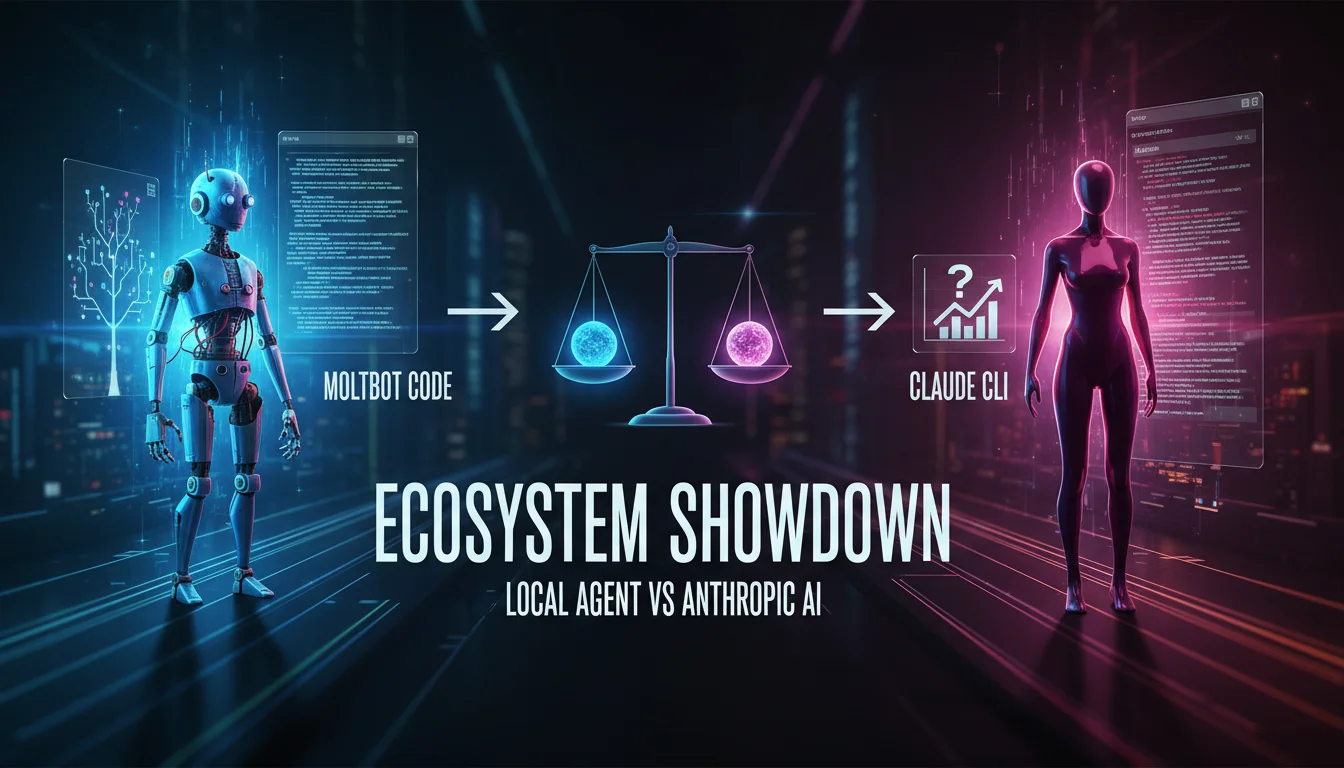

The dawn of 2026 has brought a pivotal moment in the artificial intelligence landscape. We are no longer just chatting with bots; we are hiring them. The explosion of agentic AI—software that doesn’t just talk but does—has created a divide in the developer ecosystem. On one side, we have the viral, community-driven sensation Moltbot (formerly Clawdbot), a self-hosted agent that promises to be your digital executive assistant. On the other, we have Claude Code, Anthropic’s official, polished command-line interface (CLI) tool designed to revolutionize software development.
If you have been seeing the frantic GitHub activity, the “Mac Mini shortages” rumors, or the heated debates about trademark battles, you know this is more than just a software comparison. It is a choice between two philosophies: Local, sovereignty-focused automation versus Cloud-native, enterprise-grade specialization.
In this comprehensive guide, we will dissect the Moltbot vs Claude Code debate. We will explore their origins, architecture, security implications, and help you decide which digital ecosystem deserves your time—and your hardware.
The Rise of the Agents: Why Now?
Before diving into the features, it is crucial to understand the trend driving this comparison. For years, AI was passive. You typed a prompt; it gave an answer. 2026 is the year of the Proactive Agent. These tools run in the background, remember context over days or weeks, and execute tasks without constant hand-holding.
- Moltbot represents the “Life OS”—an agent that lives on your server, talks to you on WhatsApp, and manages your personal life and business workflows.
- Claude Code represents the “Dev OS”—an agent that lives in your terminal, understands your entire codebase, and writes software alongside you.
Let’s break them down.
What is Moltbot? (The “Lobster” Agent)
Moltbot, originally known as Clawdbot before a high-profile trademark dispute with Anthropic, is an open-source, self-hosted personal AI assistant. Created by developer Peter Steinberger, it became an overnight sensation, amassing over 60,000 GitHub stars in mere days.
Key Features of Moltbot
- Local Sovereignty: Unlike cloud tools, Moltbot is designed to run on your hardware. This sparked a trend of enthusiasts buying Mac Minis and Raspberry Pis to host their agents 24/7. You own the data, the logs, and the memory.
- Proactive Communication: Moltbot doesn’t wait for you to say “hello.” It can message you on WhatsApp, Telegram, or Signal to remind you of tasks, ask for clarifications, or give you a morning briefing.
- The “Lobster” Shell: It uses a unique workflow shell (dubbed “Lobster”) that allows it to chain complex tasks—like researching a topic, saving it to a file, and emailing a summary—autonomously.
- Persistent Memory: It remembers. If you tell Moltbot your flight preference on Tuesday, it will use that context for a booking on Friday.
The Philosophy: “Claude with hands”
The community initially dubbed it “Claude with hands” because many users configured it to use Anthropic’s Claude API as its brain. However, the “hands” are the real differentiator. Moltbot has root-level access (if granted) to your file system. It can run shell scripts, manage your calendar, and essentially act as a human assistant sitting at your computer.
What is Claude Code? (The Official Specialist)
Claude Code is Anthropic’s answer to the developer’s prayer. It is an official CLI tool that brings the power of the Claude 3.5/3.7 models directly into your development environment.
Key Features of Claude Code
- Deep Codebase Understanding: Claude Code doesn’t just read one file; it indexes your local repository to understand project architecture, dependencies, and style patterns.
- Terminal Integration: It lives where developers live. You can pipe terminal output directly to it, ask it to fix a failing build, or have it resolve git merge conflicts.
- Safe Execution: While powerful, it operates within the guardrails of the Anthropic ecosystem. It is optimized for coding tasks—refactoring, debugging, and testing—rather than general “life” automation.
- Enterprise Ready: It integrates with team workflows and adheres to corporate security standards, making it the safer choice for businesses.
The Philosophy: Frictionless Development
Claude Code isn’t trying to book your flights. It is trying to make you a 10x developer. Its goal is to reduce the cognitive load of coding by handling the tedious parts of software engineering (writing tests, fixing lint errors) so you can focus on architecture.
Moltbot vs Claude Code: The Detailed Comparison
Here is where the rubber meets the road. How do these two tools stack up against each other?
1. Scope of Work
Moltbot is a generalist. It connects to the “messy” parts of human life—messaging apps, email inboxes, and random web research. If you need an agent to negotiate a refund, track a package, and then tell you a joke on WhatsApp, Moltbot is your tool.
Claude Code is a specialist. It is blind to your WhatsApp messages but omniscient about your Python scripts. If you need to refactor a legacy codebase or migrate from React to Vue, Claude Code is the superior choice.
2. Interface and Accessibility
Moltbot meets you where you are. Its defining feature is its integration with chat platforms. You text it like a friend. This lowers the barrier to entry for daily interactions but requires a complex initial server setup.
Claude Code requires you to be in the terminal. It is a tool for power users and developers. There is no “chat app” interface; the interface is the command line. This makes it incredibly fast for technical workflows but useless for checking your calendar while you are at the grocery store.
3. Security and Privacy
This is the most critical distinction.
Moltbot is a “Security Nightmare” for the uninitiated, as noted by security researchers. Because it is self-hosted and often given broad permissions (shell access, file read/write), a misconfigured Moltbot could theoretically wipe your drive or leak keys if your server is exposed. However, for privacy absolutists, it offers the ultimate benefit: your long-term memory vector database lives on your disk, not Anthropic’s cloud.
Claude Code is managed and secure by default, but it requires sending your code context to Anthropic’s servers. For most companies, this is acceptable (and covered by enterprise data agreements), but for those who demand air-gapped privacy, it is a non-starter.
4. Cost and Hardware
Moltbot is “free” open-source software, but it has hidden costs. You need hardware (like a Mac Mini or a robust VPS) to run it 24/7. You also pay for the API tokens (OpenAI, Anthropic, or DeepSeek) that power its brain.
Claude Code is typically tied to an Anthropic subscription (Pro or Team plans). There is no hardware cost—it runs on your existing dev machine—but it is a recurring SaaS expense.
Use Cases: Which One Should You Choose?
Choose Moltbot If:
- You want a “Second Brain” that manages your life, not just your code.
- You are comfortable with server administration, Docker, and potential security risks.
- You want an assistant that texts you proactively on WhatsApp or Telegram.
- You have a spare machine (Mac Mini/server) to dedicate to an always-on agent.
- You want to mix and match models (e.g., use DeepSeek for logic and Claude for writing).
Choose Claude Code If:
- You are a software developer looking to speed up your workflow.
- You work in a team environment where security and compliance are paramount.
- You want a tool that “just works” with zero infrastructure maintenance.
- You need an agent that deeply understands complex git histories and project structures.
The “Better Together” Strategy
Interestingly, the most advanced users aren’t choosing one or the other—they are using both. Because Moltbot can execute shell commands, some users have configured Moltbot to control Claude Code.
Imagine this workflow: You message Moltbot on WhatsApp: “Hey, run the tests on the main repo and if they fail, have Claude Code fix them.” Moltbot (running on your home server) triggers the terminal command to launch Claude Code, which then fixes the bug. Moltbot then messages you back: “Tests passed. I pushed the fix to main.”
This hybrid approach leverages Moltbot as the “Project Manager” and Claude Code as the “Lead Developer.”
FAQ: Common Questions
Why did Clawdbot change its name to Moltbot?
In late January 2026, Anthropic issued a trademark request regarding the name “Clawdbot” and its lobster mascot, citing similarity to their “Claude” brand. The creator, Peter Steinberger, rebranded the project to “Moltbot” (as in a lobster molting its shell) to comply, while keeping the lobster theme alive.
Is Moltbot safe to use?
Moltbot is powerful but carries risks. Giving an AI agent root access to your machine means it can delete files or expose data if hacked. It is recommended to run Moltbot in a sandboxed environment (like Docker or a separate machine) and never expose its control port to the open internet without a VPN.
Can I use Claude Code without an internet connection?
No. Claude Code relies on Anthropic’s powerful cloud models (Claude 3.5 Sonnet/Opus) to reason. While the CLI tool runs locally, the intelligence is streamed from the cloud.
Does Moltbot work on Windows?
Yes, Moltbot is cross-platform. However, the community heavily favors macOS (specifically Apple Silicon Mac Minis) due to their efficiency for always-on tasks, or Linux servers. Windows support is available but may require more configuration.
Conclusion
The battle between Moltbot vs Claude Code highlights the diverging paths of the AI revolution. Claude Code is the polished, corporate-ready tool that integrates AI into existing professional workflows. It is the safe, smart choice for getting work done. Moltbot, however, is the wild, exciting frontier of personal automation. It is for the dreamers and the tinkerers who want to build a true digital companion.
If you are a developer, Claude Code is an essential install today. But if you are a pioneer looking to define the future of human-AI interaction, Moltbot is the project to watch.