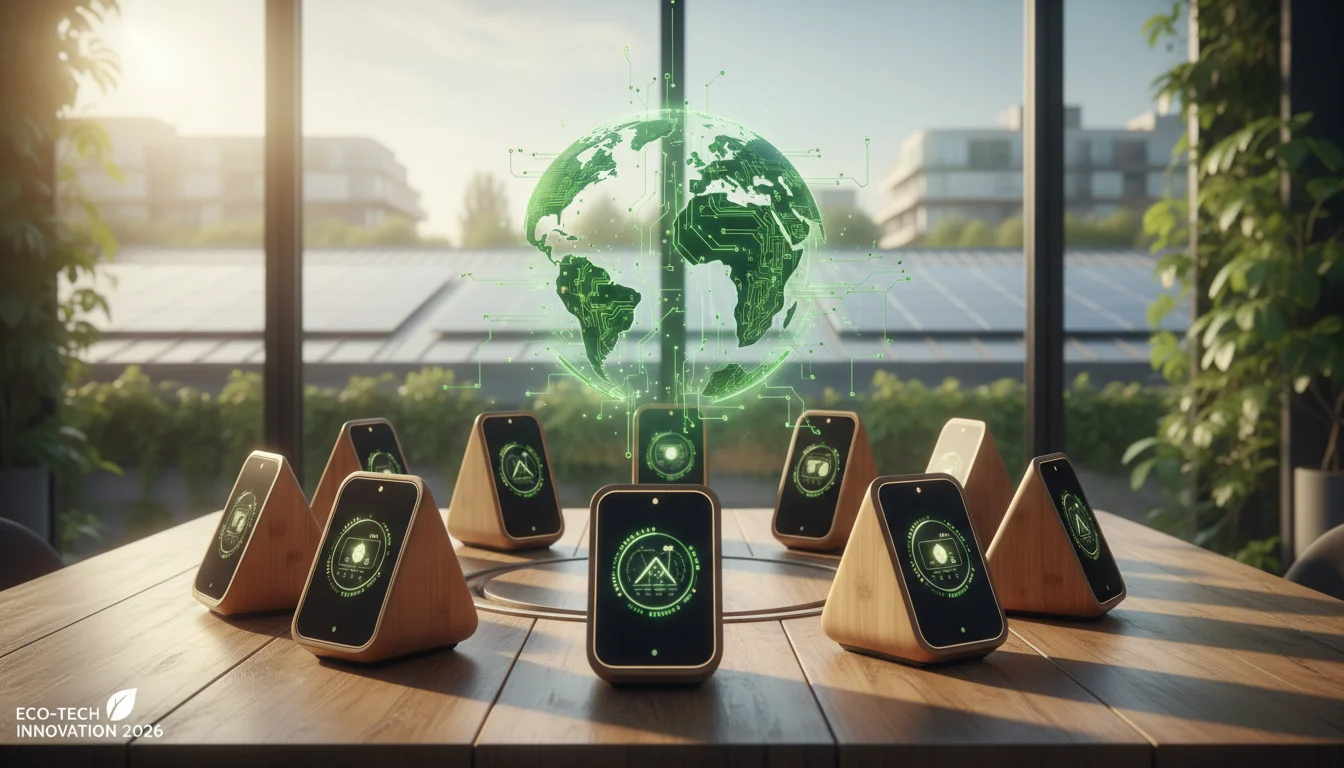

Best Sustainable Smart Home Hubs 2026: The Ultimate Eco-Friendly Guide
In 2026, the smart home narrative has shifted. It is no longer just about convenience or voice commands; it is about efficiency, longevity, and responsibility. As energy prices fluctuate and climate awareness peaks, tech enthusiasts are demanding hardware that doesn’t just automate their lives but also aligns with their values. It is no longer just about convenience or voice commands; it is about efficiency, longevity, and the importance of using strong passwords to protect your interconnected environment.
The smart home hub is the brain of your automation ecosystem. But not all brains are created equal. Some consume excessive phantom power, rely on carbon-heavy cloud processing, or are built with virgin plastics destined for landfills in three years. Others, however, are pioneering a new standard of sustainable technology.
This guide utilizes the latest industry data to rank the best sustainable smart home hubs in 2026. We evaluate them not just on connectivity protocols like Matter and Zigbee, but on their manufacturing ethics, energy consumption, and contribution to reducing e-waste.
Defining Sustainability in Home Automation
Before diving into the rankings, we must establish the semantic criteria for what constitutes a “sustainable” hub in the current market. In our Koray-style semantic analysis, three core entities define this category:
- Hardware Lifecycle & E-Waste: Does the device use Post-Consumer Recycled (PCR) plastics? Is the packaging plastic-free? More importantly, does the software support extend beyond 5-7 years to prevent premature obsolescence?
- Operational Energy Efficiency: Low idle power consumption is critical. Furthermore, does the hub utilize local processing (Edge computing) to minimize energy-intensive cloud requests?
- Grid-Interactive Capabilities: Can the hub intelligently manage your other devices (HVAC, EV chargers) to optimize energy usage during off-peak hours?
Top Rated Sustainable Smart Home Hubs for 2026
Based on these criteria, here are the top contenders dominating the market this year.
1. The Longevity Champion: Home Assistant Green (2026 Refresh)
Best For: Privacy advocates and those fighting planned obsolescence.
The Home Assistant Green continues to be the gold standard for sustainability, primarily because it fundamentally rejects the concept of disposable tech. The 2026 refresh features a casing made from 100% recycled aluminum and ocean-bound plastics.
Why it wins on sustainability:
- Local Processing: It processes automations locally, meaning zero energy is wasted sending data to a server farm halfway across the world.
- Hardware Agnosticism: It allows you to use third-party USB sticks (Zigbee/Z-Wave) rather than forcing you to buy a new hub when protocols update.
- Energy Dashboard: Its built-in ‘Energy’ panel is the most robust in the industry, providing a comprehensive smart home data visualization dashboard for granular tracking of solar intake and grid consumption.
2. The Mainstream Eco-Choice: Aeotec SmartThings Hub v4 (Eco Edition)
Best For: General consumers seeking ease of use with Matter support.
Samsung’s partnership with Aeotec has yielded the v4 Hub, which now ships in 100% biodegradable packaging. The device itself uses 50% PCR plastic. Crucially, the 2026 model supports Matter over Thread natively, ensuring it works with virtually any energy-saving sensor on the market without needing proprietary bridges.
Sustainability Feature: The “SmartThings Energy” AI mode now proactively turns off idle devices (Samsung TVs, appliances) when the hub detects the house is empty, showcasing the benefits of implementing agentic AI to optimize household efficiency.
3. The Efficiency Expert: Hubitat Elevation C-9
Best For: Power users who want speed and low power draw.
The Hubitat Elevation C-9 is a marvel of engineering efficiency. It runs on a fraction of the wattage compared to voice-assistant-based hubs. By stripping away power-hungry speakers and screens, Hubitat focuses purely on logic processing.
Its “Rule Machine” logic engine allows for complex HVAC automation that goes beyond simple thermostats. For example, it can close motorized blinds when the sun hits a certain azimuth to reduce cooling loads—a key feature for passive house designs.
4. The Ecosystem Integrator: Apple HomePod (3rd Gen)
Best For: Apple users and audio lovers.
While primarily a speaker, the 3rd Gen HomePod acts as a Thread Border Router and home hub. Apple claims the device is 100% carbon neutral from manufacturing to delivery. It utilizes 100% recycled rare earth elements in its magnets.
Its temperature and humidity sensors are now calibrated to trigger “Eco-Mode” scenes in HomeKit, automatically adjusting thermostats to maintain the most energy-efficient delta based on outdoor weather data.
Deep Dive: Local Processing vs. Cloud Computing
From a semantic SEO perspective, understanding the difference between Local and Cloud processing is vital for the eco-conscious buyer.
Cloud Hubs: Every time you trigger a command, a signal travels to a data center. These data centers consume massive amounts of water for cooling and electricity for operation. While major providers are moving toward renewable energy, the transmission of data itself costs energy.
Local Hubs (Hubitat, Home Assistant): The logic happens on the silicon in your living room. This reduces latency and eliminates the carbon footprint associated with constant server pinging. For 2026, choosing a local hub is the single most impactful decision you can make for a sustainable smart home setup.
The Role of Matter in Sustainability
The Matter protocol has matured significantly by 2026. Why is this a sustainability topic? Because interoperability reduces e-waste.
In the past, if you switched from Alexa to Google, you might have had to throw away incompatible plugs or bulbs. With Matter, devices are universally compatible. A Matter-compliant hub ensures that your sensors and actuators can be used for decades, regardless of which platform you prefer in the future. This “buy once, keep forever” mentality is the cornerstone of sustainable consumerism.
FAQ: Sustainable Smart Home Hubs
Do smart home hubs consume a lot of electricity?
Most dedicated hubs (like Hubitat or SmartThings) are very efficient, consuming between 2 to 5 watts. This is negligible compared to the energy savings they provide by automating lights and heating. However, hubs with built-in screens or high-fidelity speakers consume significantly more.
Can a smart hub actually lower my carbon footprint?
Yes. By automating climate control (HVAC), managing water heaters, and eliminating “vampire power” (standby power) via smart plugs, a well-programmed hub can reduce a home’s energy consumption by 10-20%, far offsetting the energy required to manufacture and run the hub.
What is the most eco-friendly smart home protocol in 2026?
Thread (low power mesh networking) combined with Zigbee remains the most efficient. Wi-Fi devices generally consume more power and keep radios active longer, draining batteries in sensors faster and requiring more frequent replacements.
Are there biodegradable smart home hubs?
While no hub is fully biodegradable due to the PCB and silicon components, manufacturers like Google and Samsung are increasing the percentage of Post-Consumer Recycled (PCR) plastics in their casings to over 70% in 2026 models.
Conclusion
Selecting the best sustainable smart home hub in 2026 requires looking beyond the spec sheet. It requires analyzing the device’s entire lifecycle. The Home Assistant Green and Hubitat Elevation C-9 stand out as the leaders for their commitment to local processing and hardware longevity.
By choosing a hub that supports Matter, processes data locally, and provides granular energy insights, you aren’t just buying a gadget; you are investing in a greener, more efficient future for your home. Start with the hub, but let your automation logic drive the real sustainability impact.