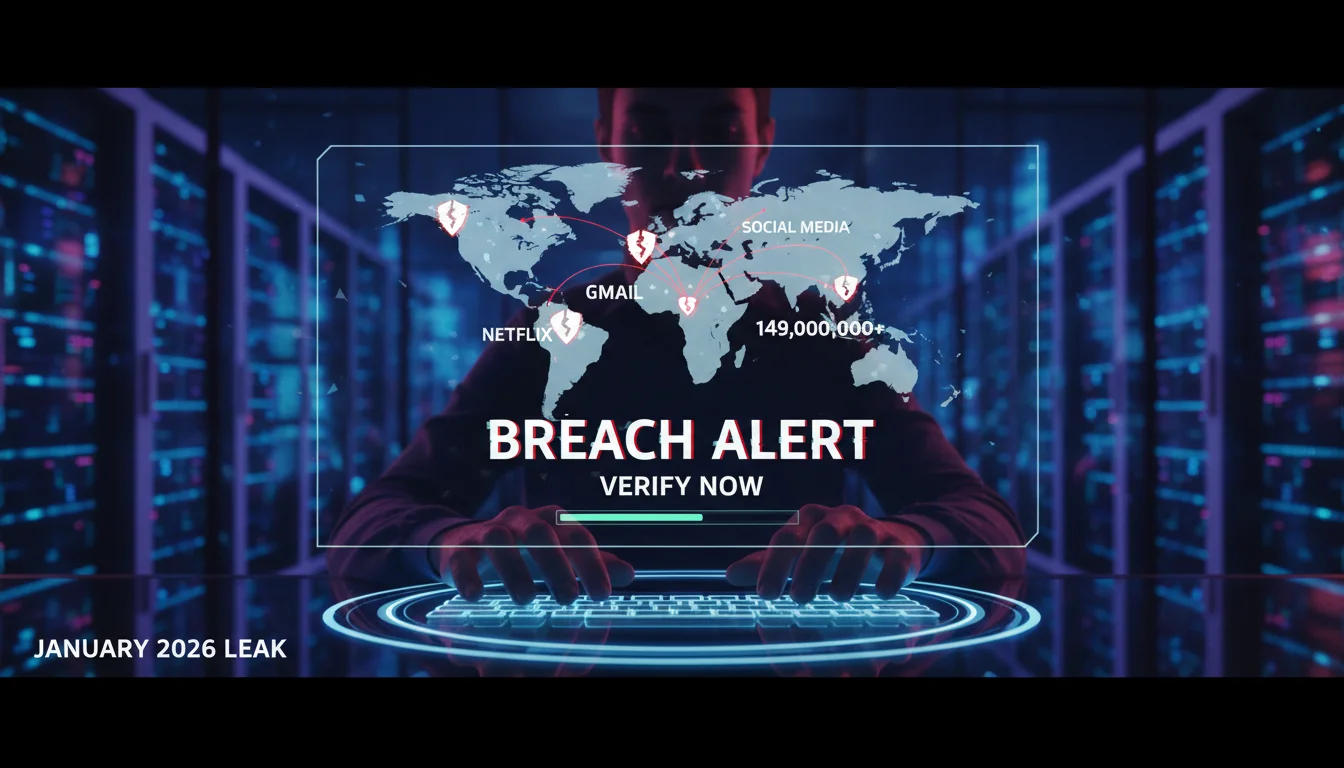

A massive dataset containing 149 million unique email and password combinations has surfaced on popular dark web forums. Dubbed the “Jan26 Megaleak,” this breach specifically targets high-value credentials for platforms like Gmail, Netflix, and major social media networks. If you are reading this, you are likely worried about your digital footprint.
You are right to be concerned. This isn’t just a rehash of old data; analysts indicate a significant portion of these records are freshly harvested via sophisticated credential stuffing attacks and malware campaigns executed over the 2025 holiday season. The need for a reliable 149 million password leak checker has never been more critical.
In this comprehensive guide, we will break down the mechanics of this specific breach, provide immediate steps to verify your exposure, and offer a semantic SEO-driven approach to securing your digital identity against future threats.
The Anatomy of the January 2026 Breach
Understanding the “what” is crucial before tackling the “how.” Unlike standard database dumps from a single company, the 149 million record leak appears to be a Compilation of Many Breaches (COMB) enhanced with fresh info-stealer logs. Cybersecurity firms have identified that the threat actors focused on high-traffic consumer services.
Why This Leak is Different
- High Fidelity Data: The leak contains verified login pairs, meaning the attackers have already tested many of these credentials against active services (a process known as “checking”).
- Platform Specificity: The dataset is segmented by service, with folders specifically labeled for ‘Netflix Premium’, ‘Gmail Primary’, and various banking institutions.
- Plain Text Exposure: Disturbingly, a significant percentage of the passwords were leaked in plain text or weak hashing algorithms (MD5), making them instantly usable by hackers.
How to Use a 149 Million Password Leak Checker
To determine if your data is part of this specific 149 million record tranche, you need to rely on reputable data breach notification services. Do not download the raw database files found on Telegram or dark web forums; these often contain malware designed to infect the very users trying to check their safety.
Recommended Verification Tools
While specific tools for the “Jan26 Megaleak” are popping up, rely on established authorities that ingest these datasets safely:
- Have I Been Pwned (HIBP): The gold standard. Check if the “Jan 2026” flag appears next to your email.
- CyberNews Personal Data Leak Checker: Often updates rapidly with large compilations.
- Browser-Based Monitors: Google Chrome and Firefox Monitor have integrated breach alerts. Go to your browser settings > Privacy > Safety Check to see if your saved passwords match known leaks.
Step-by-Step Verification Process
If you suspect exposure, follow this workflow immediately:
- Enter your primary email address into a reputable checker.
- Look for the specific reference to the “January 2026 149M Compilation” or similar nomenclature.
- Check secondary emails. Often, users forget about old recovery accounts which, if compromised, serve as a backdoor to your main digital life.
Immediate Remediation Protocol
If the 149 million password leak checker confirms your exposure, time is of the essence. Hackers use automated scripts to take over accounts within hours of a leak going public.
1. The Triage Phase: Secure the Core
Your email account is the master key. If they have your Gmail, they can reset passwords for every other service.
- Change your Email Password immediately. Use a passphrase of at least 16 characters.
- Force a Logout: Go to your email security settings and select “Sign out of all other web sessions.” This kicks out any intruders currently lurking in your inbox.
2. Credential Stuffing Defense
Because this leak targets Netflix and social media, attackers will try your leaked password across every popular site. This is credential stuffing.
- Netflix: Change your password and use the “Sign out of all devices” option to remove unauthorized viewers.
- Social Media: Enable Two-Factor Authentication (2FA) immediately. SMS is better than nothing, but an Authenticator App (like Authy or Google Authenticator) or a hardware key (YubiKey) is superior.
Semantic Security: Beyond the Password
From a semantic SEO and topical authority perspective, we must understand that a password leak is a symptom of a larger identity management issue. Relying on memory for passwords is no longer a viable strategy in 2026.
Adopting a Zero-Trust Mindset
Assume your password will be leaked eventually. Your defense strategy should be redundancy.
- Password Managers: Tools like Bitwarden or 1Password allow you to generate unique, 20-character random passwords for every single site. If Netflix gets breached, your Gmail remains safe.
- Masked Emails: Services like Apple’s “Hide My Email” or SimpleLogin create alias email addresses. If an alias leaks, you burn it without exposing your real inbox.
- Dark Web Monitoring: Subscribe to services that proactively scan dark web marketplaces for your credentials and alert you before a massive compilation becomes public news.
Frequently Asked Questions (FAQ)
Is checking my email on a leak site safe?
Yes, provided you use reputable services like Have I Been Pwned. These sites only store hashes or anonymized data and do not ask for your password to perform the check. Never enter your password into a checking tool.
What if my password listed is an old one?
Even if the password is old, it poses a risk if you have reused it on other active accounts. Furthermore, the presence of your email in the leak indicates you are a target for phishing campaigns. Be wary of emails claiming to be from Netflix or Google asking you to “verify” your account.
Why was Netflix specifically targeted in this breach?
Streaming credentials are a high-volume commodity on the dark web. They are easily sold for a few dollars each. The 2026 breach aggregated millions of these specifically for resale on automated bot markets.
Does changing my password once fix it?
Changing it once secures the account, but you must ensure you haven’t used that same password anywhere else. If you have, you must change it everywhere. This is why unique passwords for every service are mandatory.
Conclusion
The 149 million password leak of January 2026 serves as a stark reminder of the volatility of digital data. While tools like a leak checker are essential for reactive security, your long-term strategy must be proactive. By diversifying your credentials, employing strong multi-factor authentication, and utilizing password managers, you render these massive data dumps useless against you. Do not wait until the next breach makes headlines—secure your digital perimeter today.