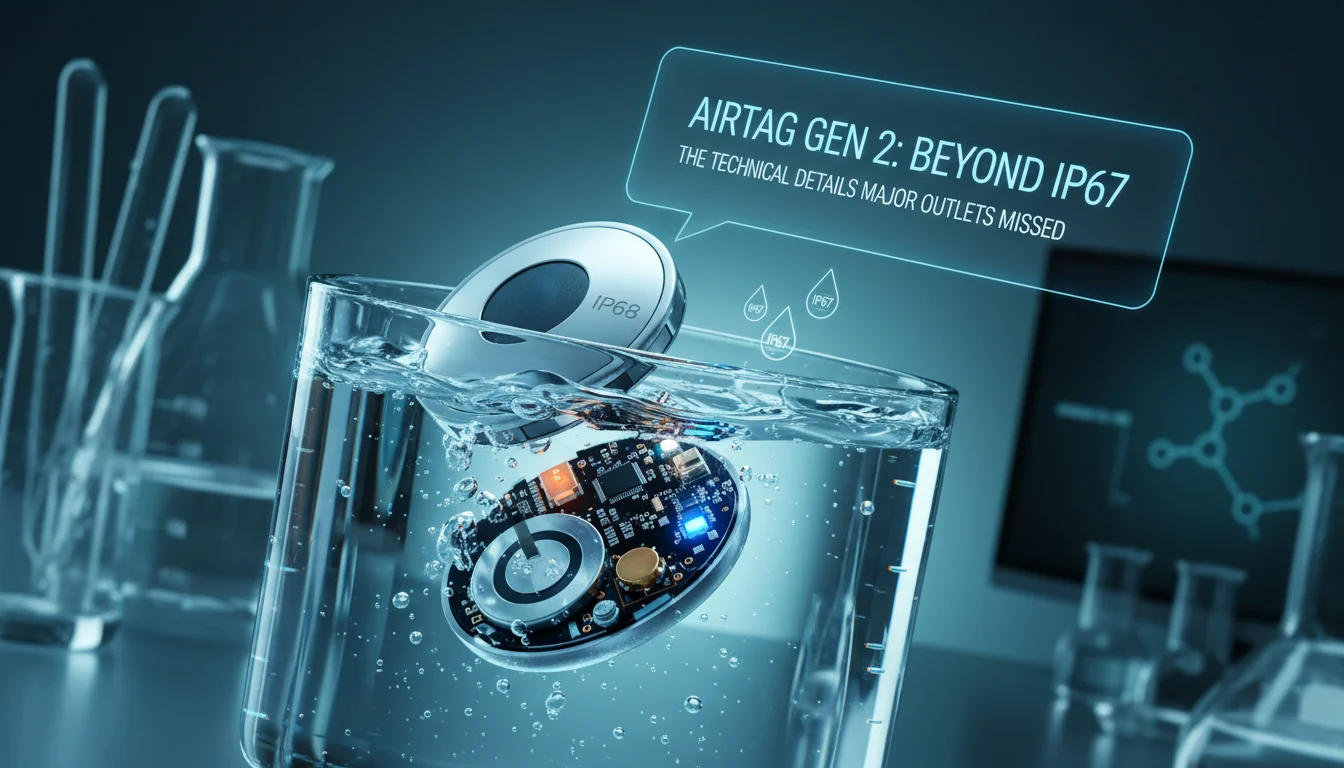

It has been five years since the original AirTag launched, and with yesterday’s release of the AirTag Gen 2 (January 26, 2026), Apple has finally updated its popular item tracker. While the headlines are dominated by the new UWB 2 chip, the 60-meter Precision Finding range, and the louder speaker, there is one critical specification that many technical users and outdoor enthusiasts are scrambling to confirm: the water resistance rating. Before you dive into the setup, make sure you know how to find your Apple ID password to link the new device to your Find My network seamlessly.
In the rush of the launch, major tech outlets have largely glossed over this detail, often simply stating it is “water resistant.” But for those of us attaching these to dog collars, hiking gear, or keys that might drop in a puddle, the specific IP rating matters. Does the AirTag Gen 2 finally bring true waterproofing to the table?
We dug into the technical specifications to bring you the definitive answer.
The Official Rating: Still IP67
Let’s cut straight to the chase. The AirTag Gen 2 is rated IP67 under IEC standard 60529.
Despite rumors of a ruggedized “Pro” version or an upgrade to the superior IP68 standard (common in modern iPhones), Apple has stuck with the exact same water resistance rating as the first-generation model.
What Does IP67 Actually Mean?
The “IP” stands for Ingress Protection. Here is how the code breaks down for the AirTag Gen 2:
- 6 (Dust Protection): The device is completely dust-tight. No solid particles can enter the casing.
- 7 (Water Protection): The device can withstand immersion in water up to 1 meter (approx. 3.3 feet) for up to 30 minutes.
Important Distinction: This means the AirTag Gen 2 is water-resistant, not waterproof. It is designed to survive accidental drops into a sink, a splash from a spilled drink, or getting caught in the rain. It is not designed for:
- Extended underwater swimming (e.g., attached to a dog that loves lakes).
- High-velocity water (like jet skiing or pressure washing).
- Submersion deeper than 1 meter.
Gen 1 vs. Gen 2: The Hidden Change
If the rating is identical, is there any difference at all? Surprisingly, yes—but it is cosmetic.
One of the subtle design changes in the AirTag Gen 2 is the text on the stainless steel battery cover. Unlike the original, which kept its specs relatively minimal, the AirTag Gen 2 explicitly prints “IP67” on the back cover.
This move by Apple suggests they want to be transparent about the device’s limits right out of the box, likely to reduce customer support claims from users who assumed the device was fully waterproof.
Why Didn’t Apple Upgrade to IP68?
Many users are asking why the AirTag 2 didn’t get the IP68 rating found in the iPhone 17 (which can handle 6 meters for 30 minutes). The answer likely lies in the user-replaceable battery.
The AirTag Gen 2 retains the CR2032 coin cell battery mechanism. To achieve a higher IP68 rating, devices usually require permanent sealing with heavy adhesives, which would make the battery non-replaceable (forcing you to buy a new tracker every year). Apple clearly decided that user-replaceable batteries were a higher priority for customers than deep-water survival.
Real-World Testing: Can It Survive Your Daily Life?
Since the specs are identical to the Gen 1, we can look at five years of data to understand how the AirTag Gen 2 will perform in real-world scenarios.
The “Washing Machine” Test
One of the most common accidents is leaving keys in a pocket during a wash cycle. Generally, an IP67 rating allows an AirTag to survive a standard wash cycle, provided the water isn’t boiling hot. However, the spinning and agitation can sometimes compromise the seal. Verdict: Likely to survive, but not guaranteed.
The “Muddy Dog” Scenario
If you use the AirTag 2 on a pet collar, IP67 is generally sufficient for rain, puddles, and mud. For parents using these trackers on children’s backpacks, staying informed about parental controls and privacy is just as important as the physical durability of the device. However, if your dog dives into a lake or ocean, the pressure at depths greater than 3 feet can breach the seal. Verdict: Safe for rain, risky for swimming.
How to Improve Water Resistance
If you need better protection than IP67 offers, you don’t need to wait for an AirTag 3. The market is flooded with accessories that can bridge the gap.
- Waterproof Cases: Third-party screw-top cases often include their own rubber O-rings, effectively adding a second layer of protection.
- Rugged Mounts: For bikes or outdoor gear, look for mounts that fully enclose the AirTag, rather than the open “keychain” style holders Apple sells.
Conclusion
The AirTag Gen 2 is a significant upgrade in terms of range, audio volume, and precision finding. However, regarding durability against water, it stays the course. The IP67 rating is a calculated compromise, preserving the beloved user-replaceable battery feature at the cost of “true” waterproofing. Much like knowing how to reset AirPods to default when they encounter connectivity bugs, understanding the maintenance and limitations of your gear is essential for any Apple user.
For 99% of users, this rating is sufficient. But if you are planning to track items in harsh aquatic environments, relying solely on the naked AirTag Gen 2 might leave you high and dry.
Frequently Asked Questions (FAQ)
Is the AirTag Gen 2 waterproof?
No, it is water-resistant with an IP67 rating. It can handle submersion in 1 meter of water for 30 minutes, but it is not fully waterproof for deep diving or high-pressure water activities.
Can I take the AirTag Gen 2 swimming?
It is not recommended. While it might survive a quick dip in the shallow end, the movement of swimming increases water pressure, which can breach the IP67 seals. Salt water and chlorine can also degrade the gaskets over time.
Did the battery design change in Gen 2?
No, the AirTag Gen 2 still uses a standard, user-replaceable CR2032 coin cell battery. This removable cover is the main reason the device is rated IP67 rather than the higher IP68.
What should I do if my AirTag Gen 2 gets wet?
Dry the exterior with a lint-free cloth. If it was submerged, it is best to remove the battery cover and battery to ensure no water breached the seal. Let it air dry completely before reassembling.