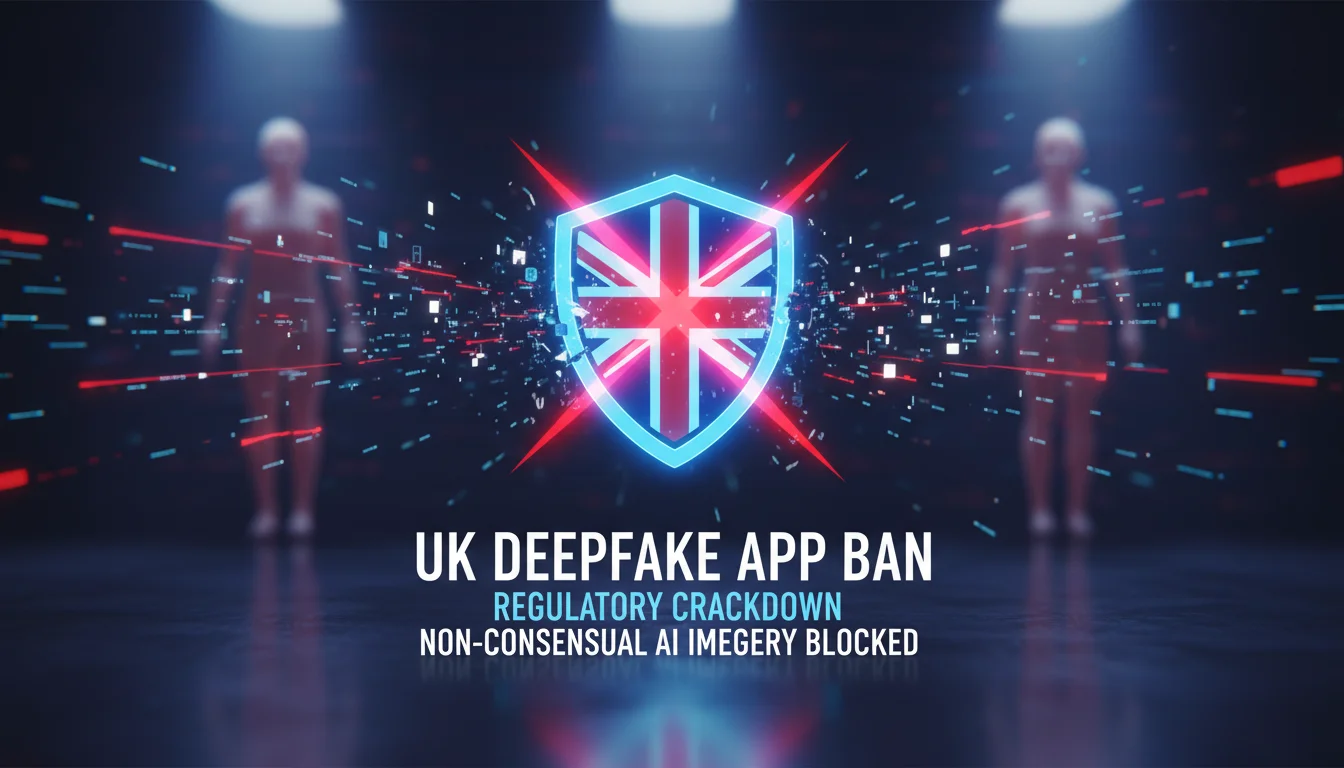

The digital landscape in the United Kingdom is undergoing a seismic legal shift. In a decisive move to combat the proliferation of non-consensual intimate imagery (NCII), the Ministry of Justice has announced a severe crackdown on deepfake nudification apps and the creation of sexually explicit AI-generated content. This regulatory pivot marks one of the world’s most aggressive stances against the misuse of artificial intelligence, especially amidst the Grok AI deepfake backlash and European regulation shifts, transitioning from penalizing the sharing of such images to criminalizing their very creation.
For tech industry observers, app developers, and privacy advocates, this development signals a critical turning point in AI governance. The era of unregulated generative AI tools specifically designed to harass and humiliate is coming to an abrupt end. This comprehensive guide explores the nuances of the new legislation, the technological context of the ban, and the future implications for the tech sector.
The New Legal Landscape: Criminalizing Creation
Previously, UK law primarily focused on the distribution of private sexual images without consent, often prosecuted under “revenge porn” laws. However, these statutes left a glaring loophole: the creation of synthetic imagery where no actual private photo was stolen, but rather fabricated using AI. The new amendment to the Criminal Justice Bill closes this gap.
Under the new measures, the creation of a sexually explicit deepfake is now a specific criminal offense, regardless of whether the creator intends to share the image. This is a crucial distinction that targets the developers and users of “nudification” software directly.
Key Provisions of the Ban
- Prosecution for Creation: Individuals can be prosecuted merely for using an app to generate a sexually explicit image of another person without consent.
- Unlimited Fines and Jail Time: Offenders face unlimited fines and, if the image is shared widely, prison sentences. The intent to cause alarm, humiliation, or distress creates an aggravated offense punishable by potential imprisonment.
- Strict Liability for Developers: While the primary focus is on the creator (user), the legislation places immense pressure on platforms hosting these tools to remove them or face regulatory scrutiny under the Online Safety Act.
Why the Ban is Happening Now: The Rise of “Nudification” Tech
The urgency behind this ban stems from the rapid democratization of generative AI. “Nudification” apps—software that uses machine learning algorithms (specifically Generative Adversarial Networks or GANs) to digitally remove clothing from photos of clothed individuals—have surged in popularity.
The Technology Behind the Trend
These applications utilize sophisticated image-to-image translation. The AI is trained on vast datasets of nude anatomy and clothed individuals. When a user uploads a photo, the AI maps the subject’s pose and lighting, then synthetically generates a nude body that matches the skin tone and context of the original image.
By late 2023 and early 2024, distinct shifts in the market accelerated the need for regulation:
- Accessibility: High-end GPU power is no longer required. These tools moved from obscure GitHub repositories to user-friendly web interfaces and mobile apps.
- Public Outcry: High-profile cases involving celebrities (such as the Taylor Swift deepfakes) and a Channel 4 documentary highlighting the impact on schools and teenagers brought the issue to the forefront of the national conversation.
- Volume of Content: Research indicates a quadruple-digit percentage increase in the creation of deepfake pornography over the last five years, with the vast majority targeting women.
Impact on Tech Giants and App Stores
This legislative change operates in tandem with the Online Safety Act, creating a pincer movement on the tech industry. For major platforms like Google Play and the Apple App Store, the “passive host” defense is eroding.
Algorithmic Accountability
Search engines and social media platforms are now under stricter obligations to prevent the discovery of these tools. The “safety by design” principle mandated by UK regulators requires platforms to:
- Audit Algorithms: Ensure recommendation engines are not suggesting nudification apps to users.
- Quick Removal: Establish expedited channels for removing content and banning developer accounts associated with NCII tools.
- Age Verification: Implement stricter age-gating, as many perpetrators and victims are minors.
The Semantic Shift: From “Fake News” to “Digital Violence”
From a Semantic SEO and cultural perspective, the language surrounding deepfakes is shifting. We are moving away from discussing deepfakes merely as vehicles for misinformation (political fake news) to recognizing them as tools of image-based sexual abuse.
This shift is critical for content strategists and policy makers. The entities involved are no longer just “politicians” or “hoaxes”; they are now “victims,” “sexual offenses,” and “digital violence.” This reclassification allows the legal system to apply existing frameworks of harassment and sexual assault to the digital realm.
What This Means for AI Developers
For legitimate AI developers, this ban introduces new compliance hurdles. While the ban targets malicious use, it necessitates the implementation of ethical guardrails and a focus on offline AI privacy tools for business applications to prevent the misuse of generative models.
Required Guardrails
- NSFW Filters: Robust filtering at the prompt and generation level to prevent the creation of nudity involving real people.
- Watermarking: Embedding invisible metadata (like C2PA standards) to trace the origin of AI-generated content.
- KYC for API Access: Tighter controls on who can access powerful image generation APIs to prevent bad actors from building wrapper apps that bypass safety filters.
Frequently Asked Questions (FAQ)
Is it illegal to make a deepfake if I don’t share it?
Yes. Under the new UK Criminal Justice Bill amendments, the creation of a sexually explicit deepfake without consent is a criminal offense, even if the image remains on your private device.
What is the penalty for creating deepfake pornography in the UK?
Penalties can range from unlimited fines to prison sentences. If the content is shared or created with the intent to cause distress, the severity of the sentencing increases significantly.
How do these laws affect VPN users?
While VPNs can obfuscate a user’s location, the crime is committed by the person residing within the UK jurisdiction. If law enforcement identifies the creator through other digital footprints, the use of a VPN does not grant immunity from UK criminal law.
Are general AI art tools banned?
No. Standard AI art tools (like Midjourney or DALL-E) are not banned. The legislation specifically targets the creation of non-consensual sexually explicit content. Legitimate tools have safety filters to prevent this specific misuse.
Conclusion
The UK’s ban on deepfake nudification apps represents a watershed moment in the intersection of technology and human rights. By criminalizing the creation of non-consensual intimate imagery, the government has sent a clear message: virtual actions have real-world consequences. For the tech industry, this reinforces the necessity of ethical AI development and safety-by-design. Users should also educate themselves on how to use modern AI models safely to ensure compliance with emerging standards. As these laws come into full effect, we expect to see a ripple effect across global jurisdictions, establishing a new standard for digital safety in the age of artificial intelligence.