
As we approach the highly anticipated September 2026 launch of the iPhone 18 lineup, the tech world is ablaze with leaks and supply chain rumors. While iterative camera upgrades and display tweaks are standard fare, the true game-changer lies beneath the glass: the iPhone 18 C2 chip. For over a decade, Apple has relied on third-party suppliers—most notably Qualcomm—for its cellular modems, while building its own world-class A-series application processors. Now, Apple is finally crossing its last major hardware frontier with its first fully in-house modem/processor hybrid.
The C2 chip represents a monumental shift in mobile architecture. By integrating the baseband modem directly into the primary system-on-chip (SoC) architecture, Apple is fundamentally rewriting the rules of smartphone efficiency, thermal management, and logic board design. As tech enthusiasts and industry analysts parse through the latest supply chain leaks, one thing is abundantly clear: the C2 chip isn’t just an upgrade; it is a profound reimagining of how a smartphone computes and communicates.
In this comprehensive guide, we will dive deep into the leaked specifications of the iPhone 18 C2 chip, explore the technical nuances of Apple’s hybrid architecture, and analyze exactly what this means for your everyday mobile experience.
What is the Apple C2 Chip? The Anatomy of a Hybrid
To understand the significance of the C2 chip, we must first look at how traditional smartphone internals are designed. Historically, the iPhone’s logic board housed an A-series processor (like the A19 Pro) responsible for computing, graphics, and AI tasks, sitting alongside a separate, discrete Qualcomm Snapdragon baseband modem handling 5G and cellular connectivity. This two-chip solution requires separate power management protocols, dedicated physical pathways on the motherboard, and divided thermal zones.
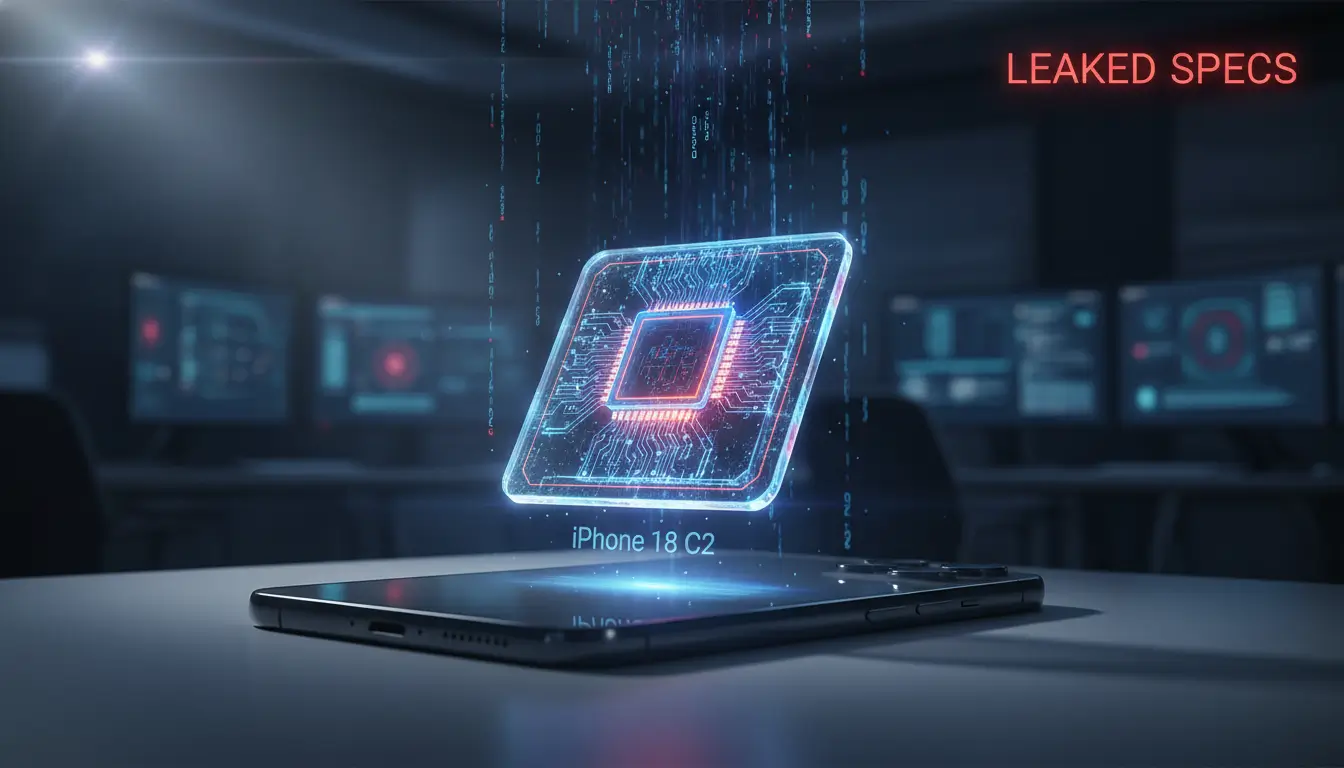
The C2 chip changes this paradigm. It is an ultra-integrated modem-processor hybrid. By bringing the cellular baseband directly onto the same silicon package as the CPU, GPU, and Neural Engine—or utilizing advanced 3D chiplet packaging to bond them seamlessly—Apple effectively eliminates the communication bottleneck between the processor and the network.
The Long Road to Silicon Independence
Apple’s journey to the C2 chip has been nearly a decade in the making. Following its acquisition of Intel’s smartphone modem business in 2019, Apple embarked on a multi-billion-dollar R&D mission to break free from Qualcomm’s licensing fees and hardware constraints. Early attempts faced hurdles with extreme thermal throttling and millimeter-wave (mmWave) efficiency. However, the C2 chip leaks indicate that Apple has not only solved these engineering challenges but has optimized the modem to work in perfect tandem with its core computing architecture.
Leaked iPhone 18 C2 Chip Specifications
While Apple maintains its strict culture of secrecy, prominent supply chain analysts and silicon fabrication partners have provided a clear picture of the C2 chip’s technical capabilities. Here is a detailed breakdown of the leaked specifications driving the industry buzz.
Architecture and TSMC’s 2nm (N2) Process Node
At the heart of the C2’s performance metrics is its fabrication process. The C2 chip is heavily rumored to be manufactured using TSMC’s cutting-edge 2-nanometer (N2) process technology. Shrinking the node from the previous 3nm generation allows for an unprecedented transistor density.
- Transistor Count: Expected to surpass 30 billion transistors, creating a massive computational canvas.
- Node Efficiency: The 2nm process delivers roughly a 10-15% speed improvement at the same power, or a 25-30% power reduction at the same speed, compared to the N3E node used in previous generations.
- Unified Memory Architecture: The hybrid design allows the modem to share high-bandwidth, low-latency memory pools with the CPU, reducing redundant data caching.
Integrated 5G Advanced and Early 6G Capabilities
The connectivity specs of the C2 chip are designed to future-proof the iPhone 18. Instead of a generic off-the-shelf modem, Apple’s custom baseband is tailored explicitly for iOS.
- 5G Advanced (Release 18): The C2 fully supports the 3GPP Release 18 standard, often dubbed “5G Advanced.” This translates to vastly improved network slicing, dramatically lower latency for augmented reality (AR), and better edge-computing handoffs.
- Peak Speeds: Leaks suggest theoretical downlink speeds exceeding 12 Gbps and uplink speeds pushing 3.5 Gbps in optimal mmWave environments.
- AI-Driven RF Management: The C2 utilizes the onboard Neural Engine to intelligently predict cell tower handoffs and optimize radio frequency (RF) output, minimizing dead zones and preventing dropped calls.
Advanced Thermal Management
One of the biggest risks of putting a high-speed cellular modem on the same package as a high-performance CPU is heat. Modems get notoriously hot when searching for weak 5G signals. Apple has reportedly mitigated this using a new graphene-based heat spreader integrated directly into the chip’s packaging, alongside intelligent workload distribution that throttles non-essential background compute tasks when the modem requires peak power.
How the C2 Chip Transforms the iPhone 18 Experience
Raw specifications are only part of the story. The integration of the C2 chip translates to tangible, user-facing benefits that will redefine the baseline expectations for premium smartphones in 2026.
Unprecedented Battery Life Improvements
Perhaps the most consumer-friendly advantage of the C2 chip is its impact on battery life. Standby power draw—the battery drain that occurs when your phone is in your pocket staying connected to cell towers—is a massive pain point. Because the C2 chip manages power centrally rather than negotiating between two separate processors, idle battery drain could be reduced by up to 40%.
Furthermore, by eliminating a separate modem chip, Apple frees up valuable physical real estate on the iPhone 18’s logic board. This reclaimed space is expected to be utilized for a physically larger, higher-capacity battery cell. Combined with the 2nm efficiency, the iPhone 18 Pro models could realistically offer multi-day battery life under normal usage conditions.
Enhanced AI and Machine Learning On-Device
With the rapid evolution of Apple Intelligence and on-device Large Language Models (LLMs), the iPhone relies heavily on immediate cloud access when local processing falls short. The C2’s hybrid nature means the Neural Engine has direct, zero-latency access to the cellular pipeline. When your iPhone needs to pull data from Apple’s Private Cloud Compute servers to answer a complex Siri query, the request bypasses traditional internal hardware bottlenecks. This results in AI interactions that feel instantaneous, blurring the line between local and cloud computing.
Seamless Satellite Connectivity and Spatial Networking
Apple introduced Emergency SOS via satellite years ago, but the C2 chip pushes non-terrestrial networks (NTN) to the next level. Integrated directly into the silicon is support for robust, two-way satellite messaging (and potentially low-bandwidth voice calls) without the need for bulky external antennas. This makes the iPhone 18 an ultimate off-grid device.
Apple vs. Qualcomm: The End of an Era?
The introduction of the C2 chip marks a pivotal moment in tech industry economics. For years, Apple has been one of Qualcomm’s largest customers. While Apple’s transition away from Qualcomm modems won’t happen overnight—it is likely to begin with the iPhone 18 Pro tier before trickling down to standard models—it signifies the end of a highly lucrative partnership.
By controlling the entire stack from the application layer down to the radio waves, Apple achieves ultimate vertical integration. This allows them to push proprietary connectivity features between Apple devices (such as ultra-wideband AirDrop enhancements or direct iPhone-to-iPhone spatial data transfers) that competitors relying on standard Qualcomm silicon simply cannot replicate.
Release Date and Device Compatibility
Based on the current May 2026 supply chain movements, the iPhone 18 lineup is on track for its traditional September release. However, integrating a brand new hybrid chip is a massive logistical challenge.
Early consensus indicates that the iPhone 18 Pro and iPhone 18 Pro Max will be the exclusive debut vehicles for the full C2 hybrid SoC. The standard iPhone 18 models may retain a more traditional architecture—potentially pairing an A19 chip with a finalized discrete version of Apple’s modem—before the entire lineup transitions to the unified C2 architecture in 2027.
Frequently Asked Questions (FAQ)
What makes the C2 chip different from Apple’s A-series chips?
While the traditional A-series chips (like the A18 or A19) focused solely on computing, graphics, and AI processing, the C2 chip is a “hybrid” that merges these processing capabilities with the cellular baseband modem. This means a single piece of silicon handles both running your apps and connecting to 5G networks, resulting in massive space and power savings.
Will the iPhone 18 C2 chip support 6G?
While true 6G commercial networks are not expected to be widely available until closer to 2030, the C2 chip is built on the 5G Advanced (Release 18) standard, which introduces early foundational technologies for 6G. It will be the most advanced bridging technology available upon its release.
How does the integrated modem affect battery life?
Integrating the modem into the main SoC removes the need for separate power management systems and physical communication traces on the motherboard. This holistic power management, combined with TSMC’s ultra-efficient 2nm process node, is expected to drastically reduce cellular standby drain and active data consumption power.
Is the C2 chip coming to all iPhone 18 models?
Current leaks suggest a tiered approach. Given the complexity and cost of the 2nm fabrication and hybrid packaging, the C2 chip will likely be reserved for the flagship iPhone 18 Pro and Pro Max models, creating a distinct performance and battery gap between the Pro and base models.
Will the C2 chip run hotter than previous iPhones?
Integrating a modem onto the main SoC does concentrate heat generation in one area. However, Apple has completely redesigned the thermal architecture of the iPhone 18, reportedly utilizing a graphene thermal system and advanced metal battery casings to efficiently dissipate the heat, preventing thermal throttling during intense 5G usage or gaming.
Conclusion
The upcoming iPhone 18 C2 chip is far more than just a spec bump; it is a masterclass in semiconductor engineering and strategic corporate independence. By finally bringing the cellular modem in-house and merging it with its already industry-leading processing architecture, Apple is setting a new benchmark for smartphone design.
For the end consumer, the technical wizardry of the C2 chip will translate into remarkably better battery life, instantaneous AI-driven web interactions, and a device that maintains a stronger, faster connection to the digital world. As we eagerly await the official unveiling in September 2026, one thing is certain: the era of the hybrid modem-processor has arrived, and the smartphone landscape will never be the same.